
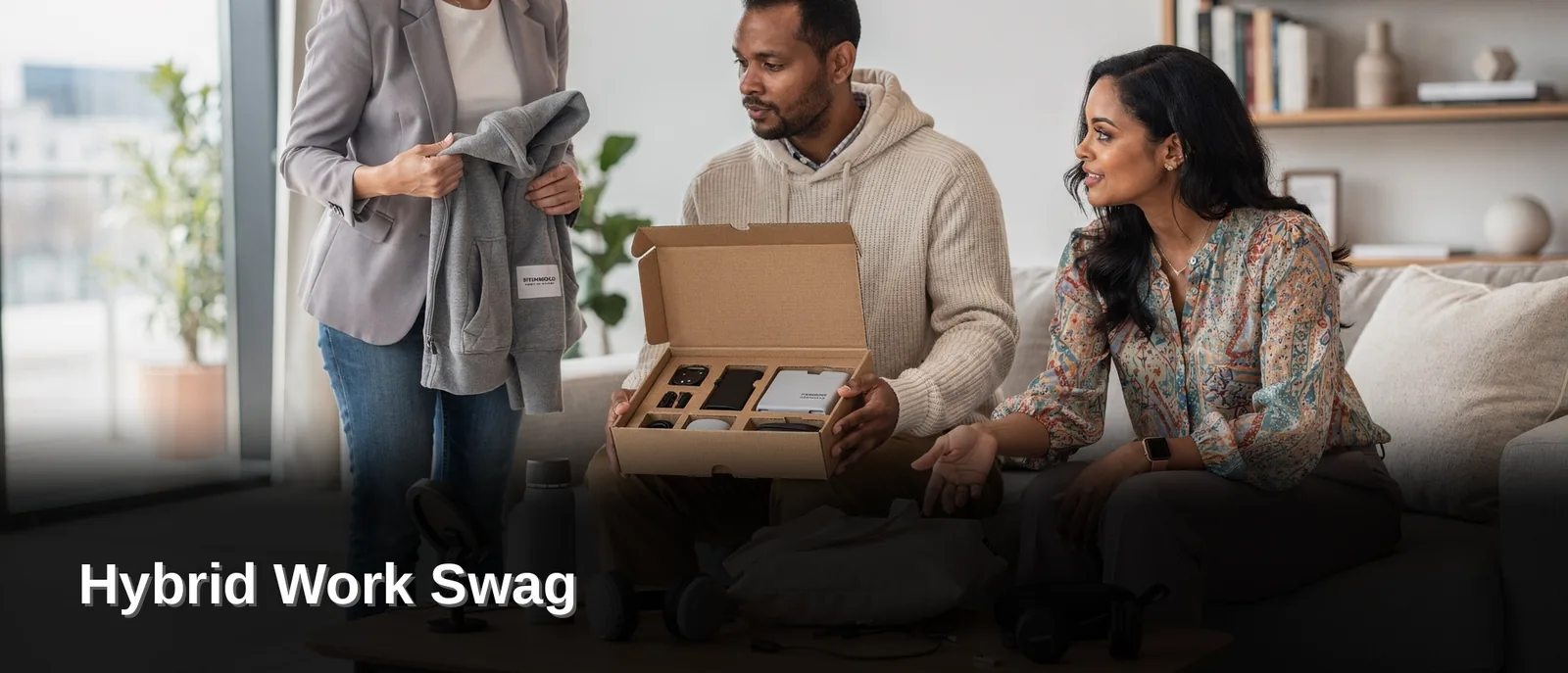
Effective hybrid workforce merchandise strategies combine welcome kits, branded apparel, and useful home-office items to maintain culture across distributed teams. With 51% of U.S. employees now preferring hybrid work, Payden & Company helps HR directors source screen-printed and embroidered products that reinforce connection, recognition, and brand identity regardless of where employees log in from.
For people operations managers and corporate event planners, the challenge goes beyond picking a logo and a product catalog. A corporate merchandise strategy built for a hybrid workforce has to account for employees who may never set foot in a shared office, which means every piece, from branded apparel for remote teams to the drinkware sitting on a home desk, has to carry the brand’s identity on its own, without a physical office environment reinforcing it. Done well, that strategy becomes a recurring touchpoint: new hires feel welcomed before their first video call, longtime employees feel recognized on anniversaries and milestones, and the company’s culture travels with the workforce instead of staying behind in an empty building.
Why Does Hybrid Work Need New Merchandise?
Hybrid arrangements now function as the default operating model for most employers, not a temporary accommodation. Robert Half research found that nearly 9 in 10 employers offer some form of hybrid arrangement in 2026. That shift renders the old office swag closet, stacked with logo mugs nobody takes home, largely obsolete. Merchandise built for one physical location can’t reach a workforce scattered across home offices, co-working spaces, and conference rooms.
The talent stakes make this urgent. Only 25% of job seekers will even consider a role requiring five days in the office. More than half rank hybrid flexibility as their top preference. Companies competing for that talent need hybrid work swag that reinforces culture no matter where an employee logs in.
What counts as effective home office branded items?
Effective home office branded items extend company identity into spaces the office used to own exclusively, apparel, drinkware, and workspace accessories employees actually use daily. Remote employee gifts and employee remote onboarding kits serve this purpose by greeting new hires with tangible brand touchpoints before day one.
Payden & Company brings over 50 years of promotional products experience, including screen printed and embroidered apparel, to this exact challenge. The firm’s stated goal centers on growing client sales and brand awareness, a fit for dispersed teams needing cohesion. Quality work from home swag does more than decorate a desk. It signals belonging to an organization an employee rarely sees in person.
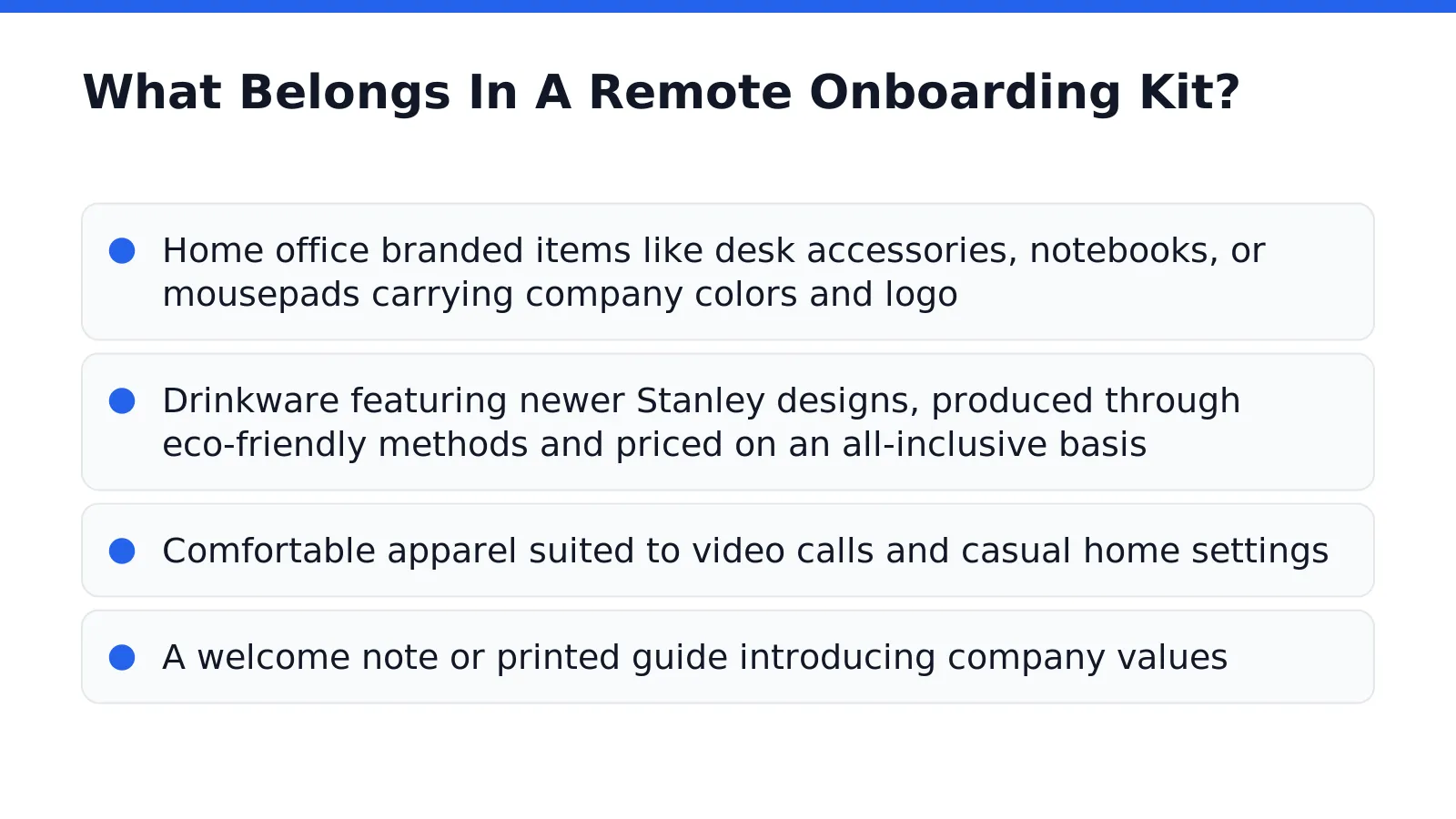
What Belongs In A Remote Onboarding Kit?
A strong employee remote onboarding kit combines practical tools with items that build connection to company culture from day one. New hires working from home lack the hallway introductions and desk tours that once carried a company’s personality. The kit has to do that work instead.
Payden & Company builds onboarding kits the same way it approaches corporate uniforms and vacation gifts: as one piece of a broader branding relationship rather than a one-off purchase. That consistency matters for HR directors managing distributed teams across multiple locations.
A well-rounded kit typically includes:
- Home office branded items like desk accessories, notebooks, or mousepads carrying company colors and logo
- Drinkware featuring newer Stanley designs, produced through eco-friendly methods and priced on an all-inclusive basis
- Comfortable apparel suited to video calls and casual home settings
- A welcome note or printed guide introducing company values
What Should Be In A Welcome Box For New Remote Hires?
Welcome boxes work best when they balance function with personal touch. Self-care items and personalized benefits have grown in importance for hybrid employees. A kit that only includes logoed pens misses the mark. Pairing practical work from home swag with one or two comfort-focused extras signals that the company values well-being, not just output.
Sourcing everything through a single promotional products partner, acting as a one-stop shop for apparel, drinkware, and recognition items, keeps kits consistent as teams scale.

How Do You Keep Remote Teams Engaged?
Consistent, well-chosen branded merchandise keeps distributed employees connected to company culture long after onboarding ends. Thoughtful remote employee gifts signal that leadership values contribution regardless of location, which strengthens retention and morale over time.
Hybrid team employee appreciation works best as a program, not a single event. Birthdays, work anniversaries, project wins, and seasonal holidays all give HR directors a natural reason to send something branded, and spacing those moments throughout the year keeps the gesture from feeling like an afterthought. A quarterly cadence, paired with a scaled-up kit for major milestones, gives distributed teams something consistent to look forward to no matter which city or time zone they are logging in from.
Budget predictability matters for programs that repeat quarterly or annually. Payden & Company’s team presents options tailored to a client’s budget and commits to on-time delivery, reducing the risk that comes with recurring hybrid work swag initiatives. That reliability lets HR directors plan engagement calendars months in advance without worrying about fulfillment delays. Client testimonials reflect this consistency across industries, including construction promotional products built on the same fulfillment model.
What should a remote gift box include?
Wellness-focused items resonate strongly right now. Corporate support for physical health, mental health, and wellness has been rising, making wellness-aligned home office branded items a relevant and welcome engagement tool. Pairing these with practical work from home swag, like drinkware or desk accessories, rounds out a box employees actually use.
Eco-friendly promotional products deserve a place in that box as well. Recycled drinkware, organic cotton apparel, and sustainably sourced notebooks let a company signal its values without saying a word, and employees increasingly notice the difference between a throwaway trinket and an item made to last. Rounding out the box with custom embroidered corporate gifts, a jacket, cap, or bag carrying a stitched logo rather than a printed one, adds a level of quality that a screen-printed item alone cannot match, and gives the box a longer shelf life on an employee’s desk or in their closet.
Does sustainability influence employee perception?
Yes. Products reflecting eco-conscious values alongside high-quality branding strengthen both employee pride and company reputation across dispersed teams. A team of award-winning experts with over 40 years of experience, fast service, and accommodation of specific requests makes sustainable sourcing easy to execute across employee remote onboarding kits and ongoing recognition programs alike.
Conclusion
In closing, hybrid workforce merchandise strategies demand a thoughtful balance between functionality, brand visibility, and employee engagement across distributed teams. By selecting quality promotional products that employees genuinely use, whether in office or remote settings, you build lasting brand equity while reinforcing company culture. Payden & Company’s expertise in custom apparel and promotional solutions positions your organization to execute these strategies with precision, ensuring every branded item strengthens your corporate identity and resonates with today’s modern workforce. From the first employee remote onboarding kit a new hire unboxes to the custom embroidered corporate gifts marking a decade of service, a well-run corporate merchandise strategy turns scattered touchpoints into a consistent story about who the company is. HR directors, people operations managers, and corporate event planners who treat branded merchandise as an ongoing program, rather than a one-time order, give hybrid and remote teams something a video call never can: a tangible, daily reminder that they belong to something bigger than their home office.